Shree Coconut App
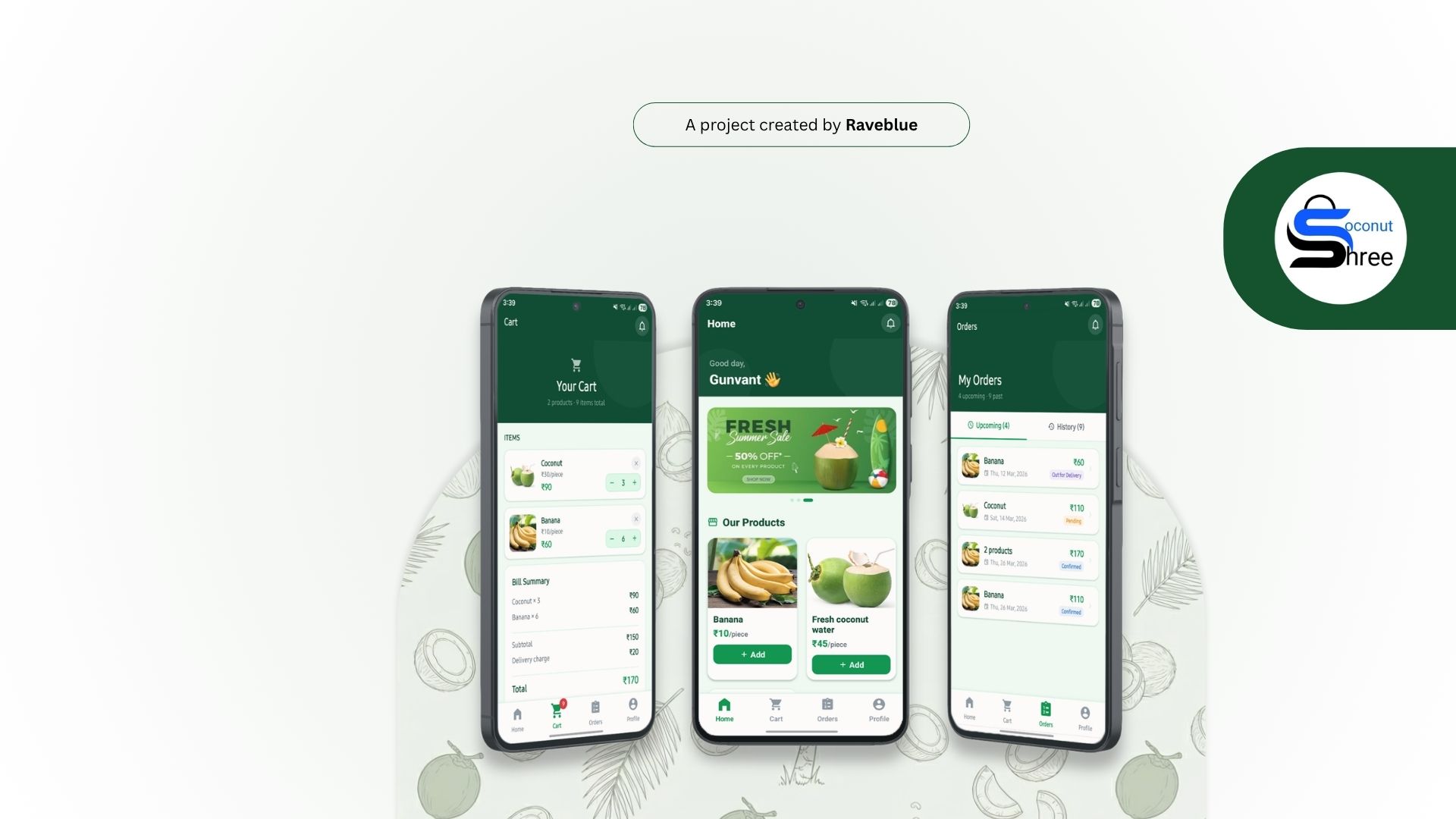
Shree Coconut — Case Study
Shree Coconut is a targeted Android application built to streamline a hyper-local supply chain. By offering an intuitive, minimal, and highly visual ordering experience, the app allows users to purchase fresh coconuts, tender coconut water, and coconut-based products — directly connecting local vendors with everyday consumers.
Client
Shree Coconut
Platform
Android Application
Release Date
2025
Problem Statement
The traditional method of buying fresh coconuts in India relies entirely on street vendors, local mandis, and informal distribution networks — creating supply chain inefficiencies, inconsistent product quality, and no reliable ordering mechanism for consumers. Existing digital grocery platforms treat coconuts as commodities within massive catalogs, making hyper-local vendor discovery nearly impossible.
For Consumers: There is no dedicated, trustworthy digital platform to browse, compare, and order fresh coconut products from local vendors with guaranteed freshness and on-time delivery.
For Vendors: Local coconut sellers have no digital storefront to reach a wider audience, manage orders efficiently, or build a loyal customer base beyond walk-in traffic.
The Challenge: How might we design a dedicated, intuitive, and visual-first mobile ordering experience that empowers local coconut vendors while giving consumers a seamless, trustworthy way to order fresh coconut products?
Objectives & Goals
Our mission was to bridge the gap between hyper-local coconut vendors and everyday consumers through a minimal, visual-first mobile experience — making fresh product discovery and ordering effortless, trustworthy, and fast.
Methodology
Our Design Process
A structured User-Centered Design (UCD) methodology following the five stages of the Design Thinking framework.
Empathize
Conducted in-depth qualitative research through interviews with local vendors, consumers, and juice stall owners to uncover pain points in the coconut supply chain.
Define
Synthesized research into clear personas, affinity maps, and a UCD canvas to frame the core problem and define project goals.
Ideate
Explored user flows, information architecture, and sketch concepts — mapping out both consumer ordering and vendor management experiences.
Prototype
Built low-fidelity wireframes progressing to a polished, high-fidelity Android prototype with a cohesive green-forward design system.
Test
Validated design decisions through usability walkthroughs with target users, iterating on navigation, product discovery, and checkout flows.
User Centered Design Canvas
We designed the UCD Canvas to deeply understand the needs, expectations, and experiences of all user types — from local vendors to everyday consumers — ensuring every design decision was grounded in real user insights.
3. Problems
- 1. No dedicated digital platform for fresh coconut ordering.
- 2. Inconsistent product quality and pricing at street vendors.
- 3. Vendors lack digital tools to manage orders and reach new customers.
- 4. No real-time delivery tracking for perishable orders.
- 5. No product variety or filter options in existing grocery apps.
4. Motives
- 1. Convenient doorstep delivery of fresh products.
- 2. Reliable freshness guarantee for every order.
- 3. Digital storefront for vendors to grow their business.
- 4. Transparent, fair pricing with no middlemen.
5. Fears
- 1. Receiving stale or poor quality products.
- 2. Payment failures or insecure transactions.
- 3. Late or missed deliveries.
1. Business
"Fresh Coconuts, Delivered to Your Door" — a hyper-local ordering ecosystem connecting coconut vendors with consumers.
2. Users
- • Home consumers
- • Restaurants & cafes
- • Juice stall owners
- • Health-conscious individuals
- • Local coconut vendors
9. Unique Value Prop
Your daily dose of freshness — order farm-fresh coconuts from trusted local vendors, delivered to your door in minutes.
8. Comp. Advantages
- 1. Hyper-local vendor focus
- 2. Visual product catalog
- 3. Freshness guarantee
- 4. Real-time order tracking
- 5. Direct vendor-consumer connection
7. Alternatives
- • Street vendors & local mandis
- • BigBasket, Blinkit
- • Generic grocery apps
6. Solutions
- 1. Dedicated visual product catalog
- 2. One-tap ordering flow
- 3. Real-time delivery tracking
- 4. Vendor ratings & reviews
- 5. Multiple payment options
- 6. Freshness badge system
- 7. Order history & reorder
- 8. Vendor dashboard & analytics
User Interviews
We designed open-ended, empathy-driven questions to deeply understand the daily habits, frustrations, and expectations of both consumers and local vendors within the coconut supply chain.
Consumer Habits
- 1. How often do you buy fresh coconuts or coconut water in a week?
- 2. Where do you currently purchase coconut products — street vendors, supermarkets, or online?
- 3. What is your biggest frustration when buying coconuts from a street vendor?
- 4. Have you ever abandoned a purchase due to quality concerns? Walk us through that experience.
Trust & Quality
- 1. What visual or physical cues do you look for to judge a coconut's freshness?
- 2. Would you trust an app-based vendor rating system for such a perishable product?
- 3. What would make you choose a digital ordering platform over your regular street vendor?
Vendor Workflow
- 1. How do you currently manage your daily orders and inventory?
- 2. What are the biggest challenges you face in reaching new customers beyond your regular footfall?
- 3. If you could automate one part of your daily operations, what would it be?
Key Insights
- Freshness Visibility Drives Purchase Confidence
- Vendors Struggle with Order Volume Management
- One-Tap Reordering is a High-Demand Feature
- Delivery Reliability is the Top Trust Factor
- Visual Product Imagery Reduces Decision Friction
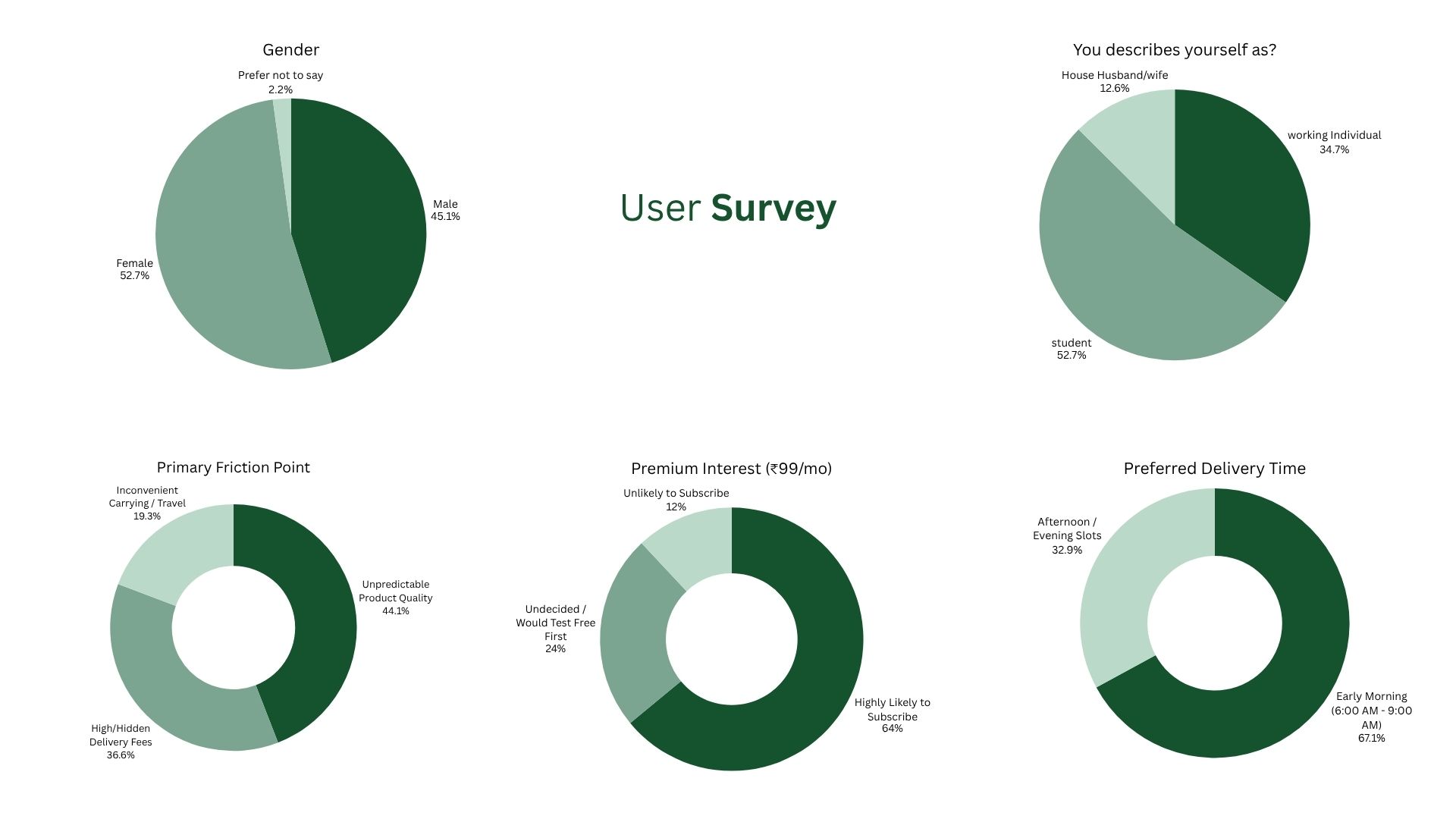
Survey Results
We conducted an online survey to understand consumer preferences, ordering habits, and feature expectations for a hyper-local coconut ordering application.
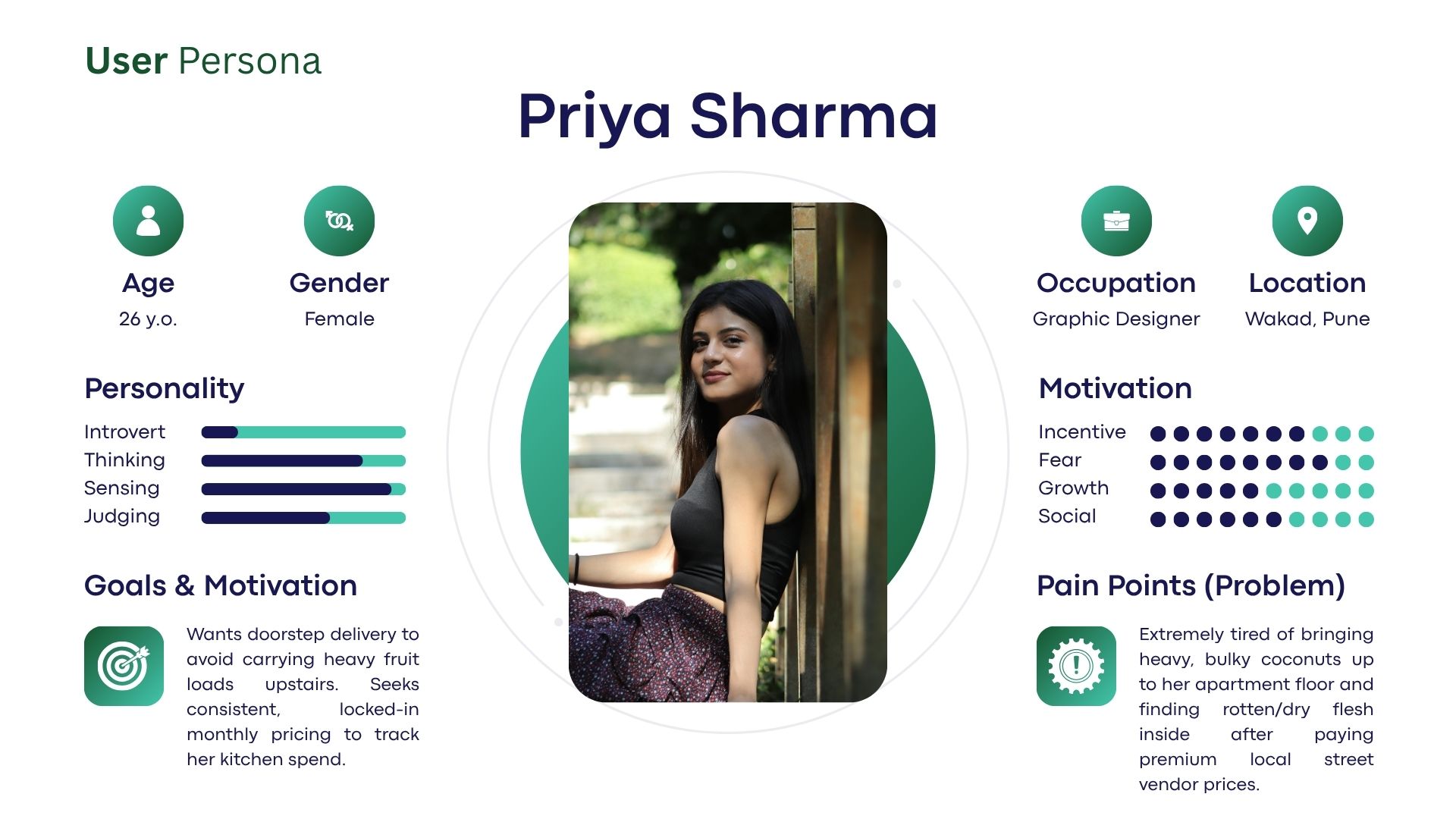
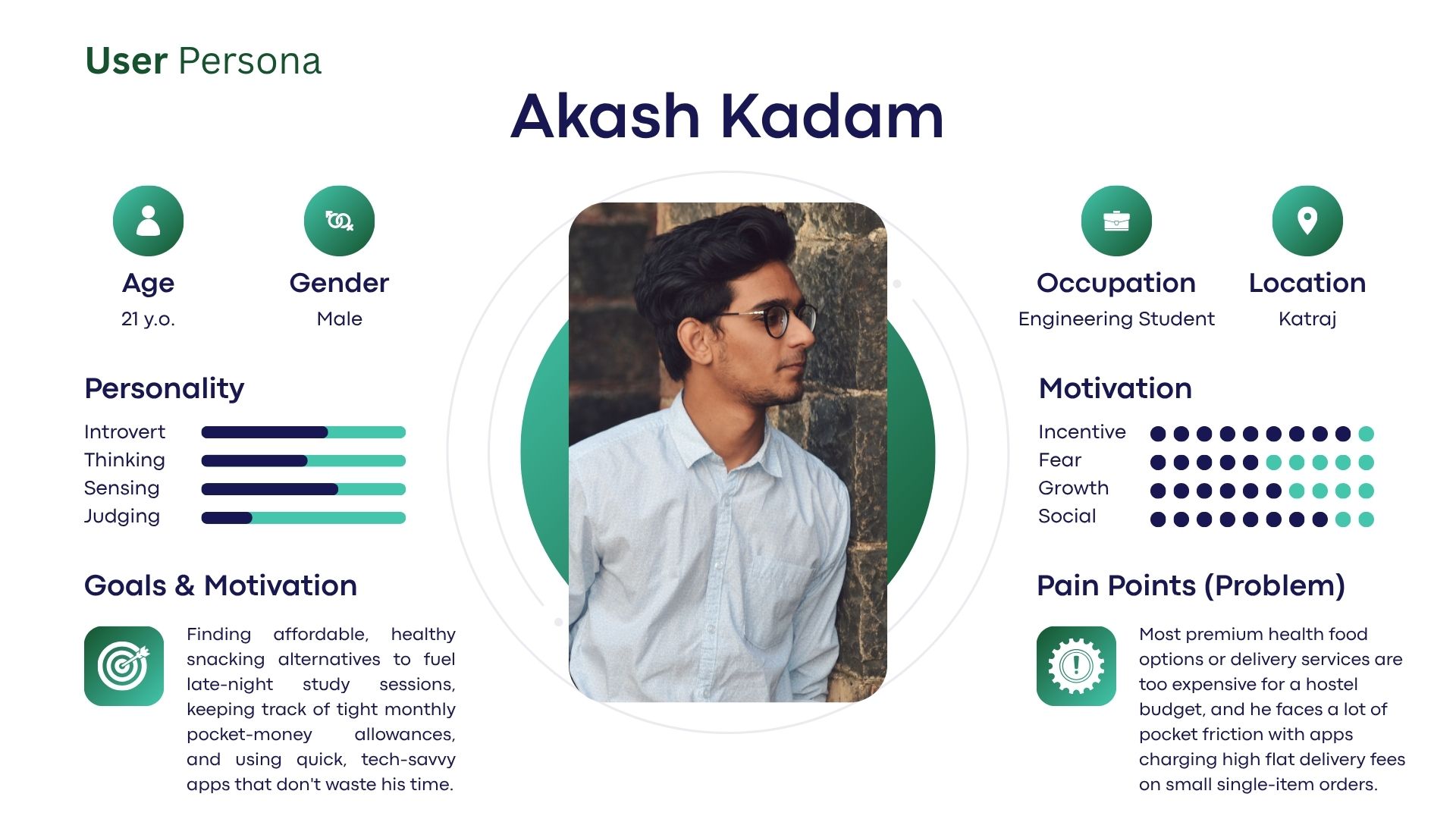
User Persona
Using data from user research, we created personas representing two key user groups — the everyday consumer and the local vendor — to guide every design decision throughout the project.
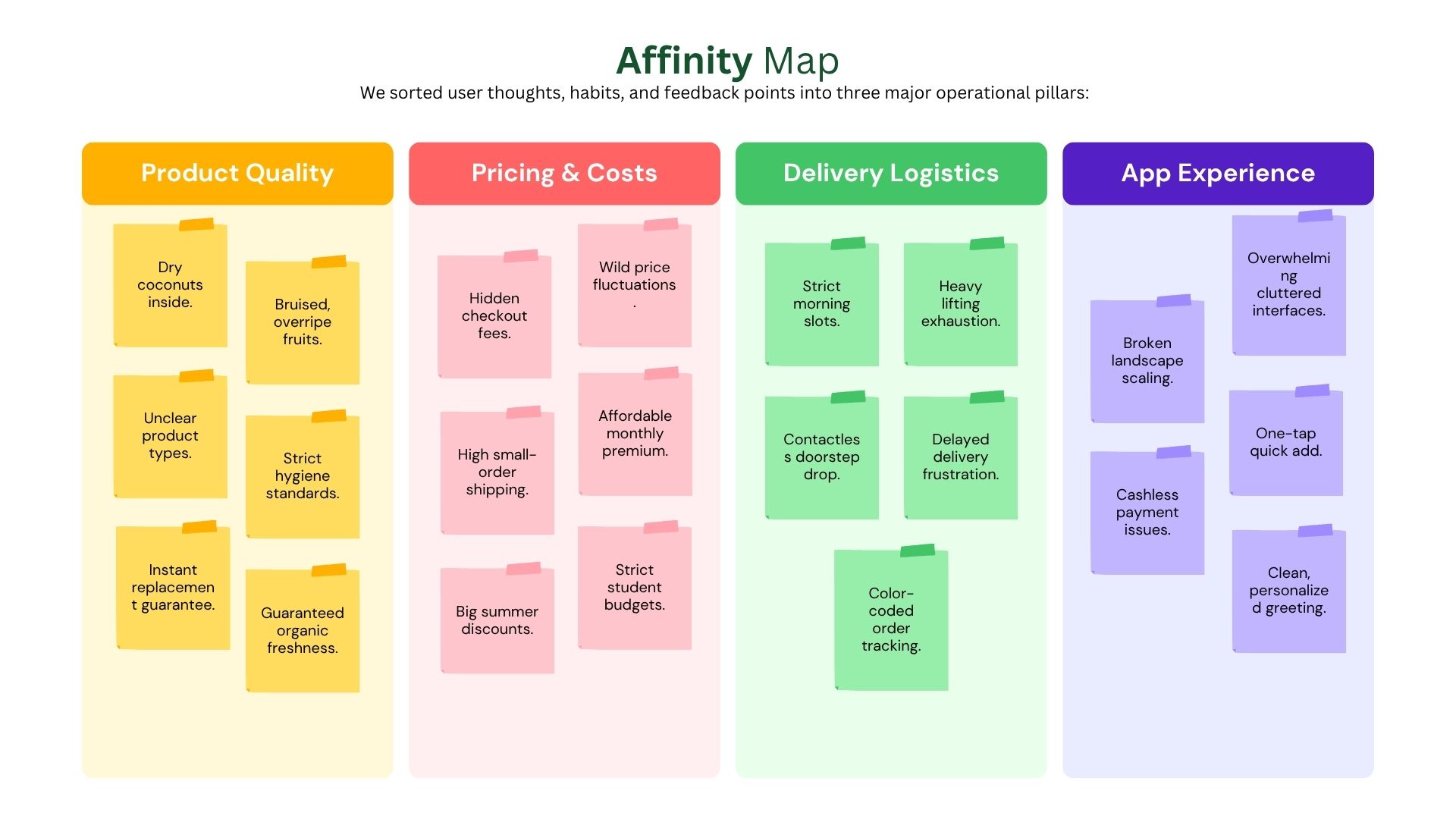
Affinity Map
Affinity mapping was used to categorise all research findings under key themes — from freshness perception and delivery trust to vendor management and product discovery — which informed the information architecture of the app.
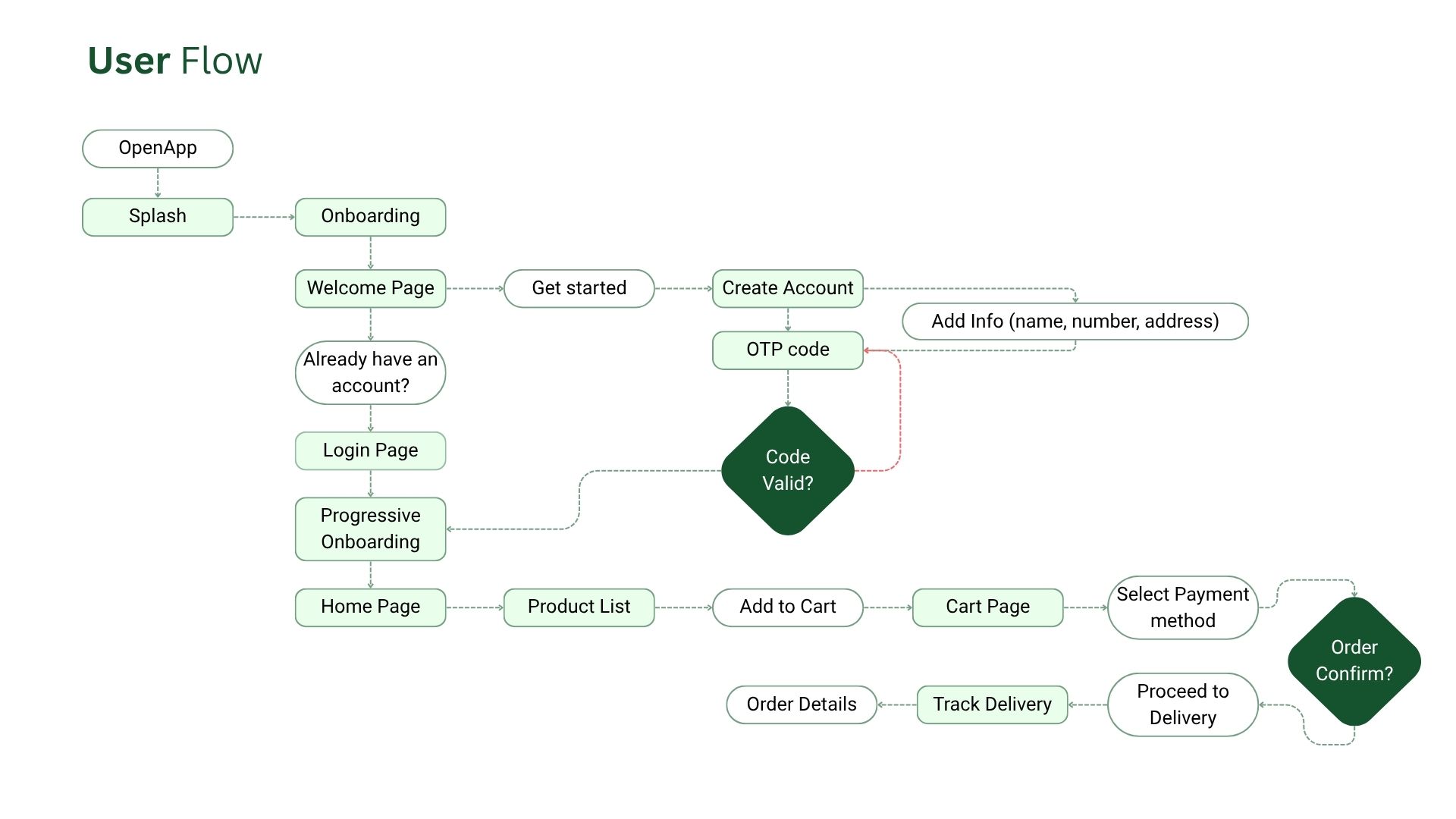
User Flow
We created detailed user flows to illustrate how different users — consumers and vendors — navigate through the application, from onboarding to order completion and delivery.
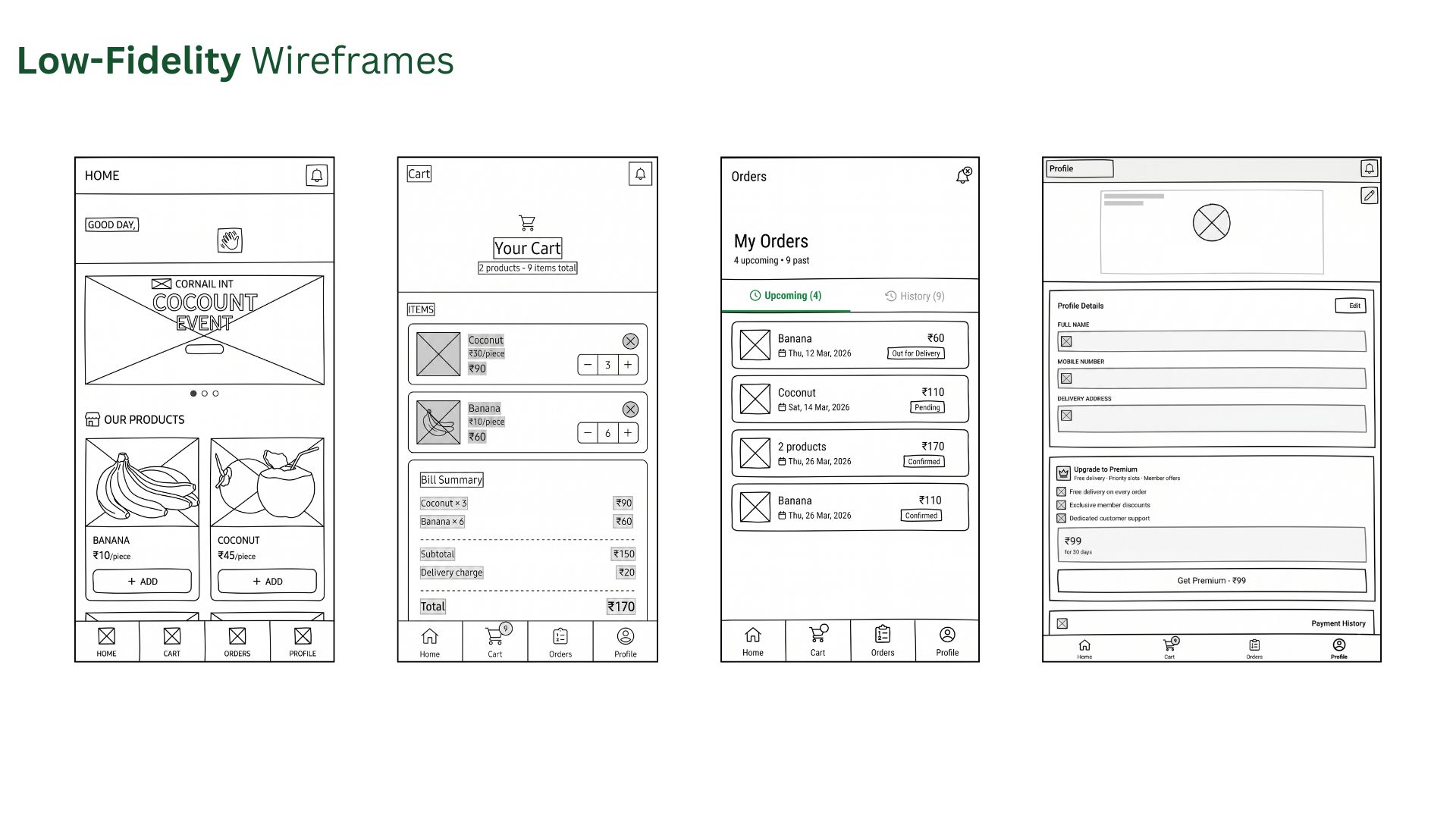
Low-Fidelity Wireframes
We sketched low-fidelity wireframes covering all key screens — from the Home screen and Product Listing to the Order Tracking flow and Vendor Dashboard — before moving into high-fidelity design.
High-Fidelity Wireframes
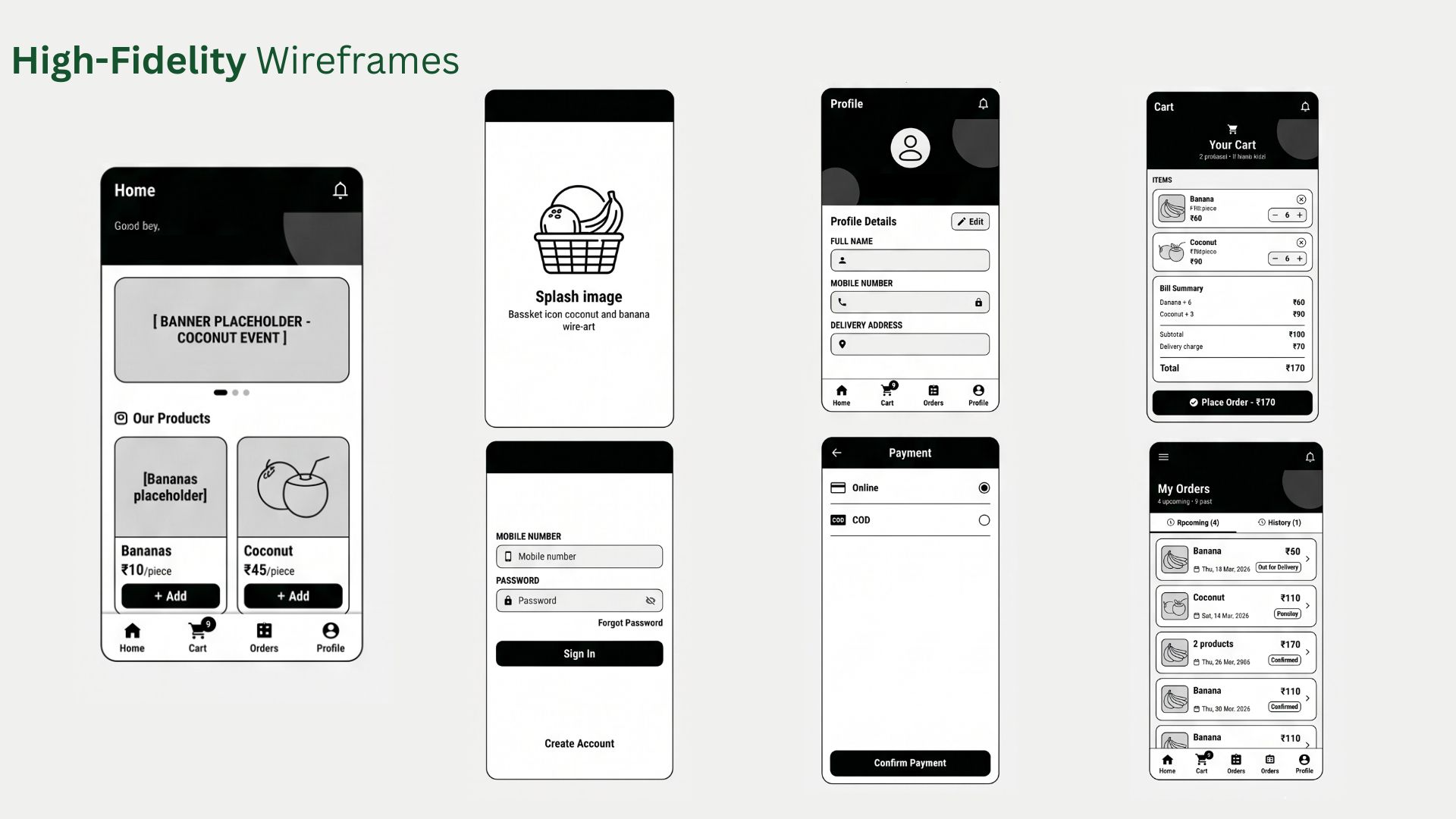
After validating the low-fidelity layouts, we refined and elevated the designs into polished, high-fidelity wireframes ready for prototyping.
Style Guide
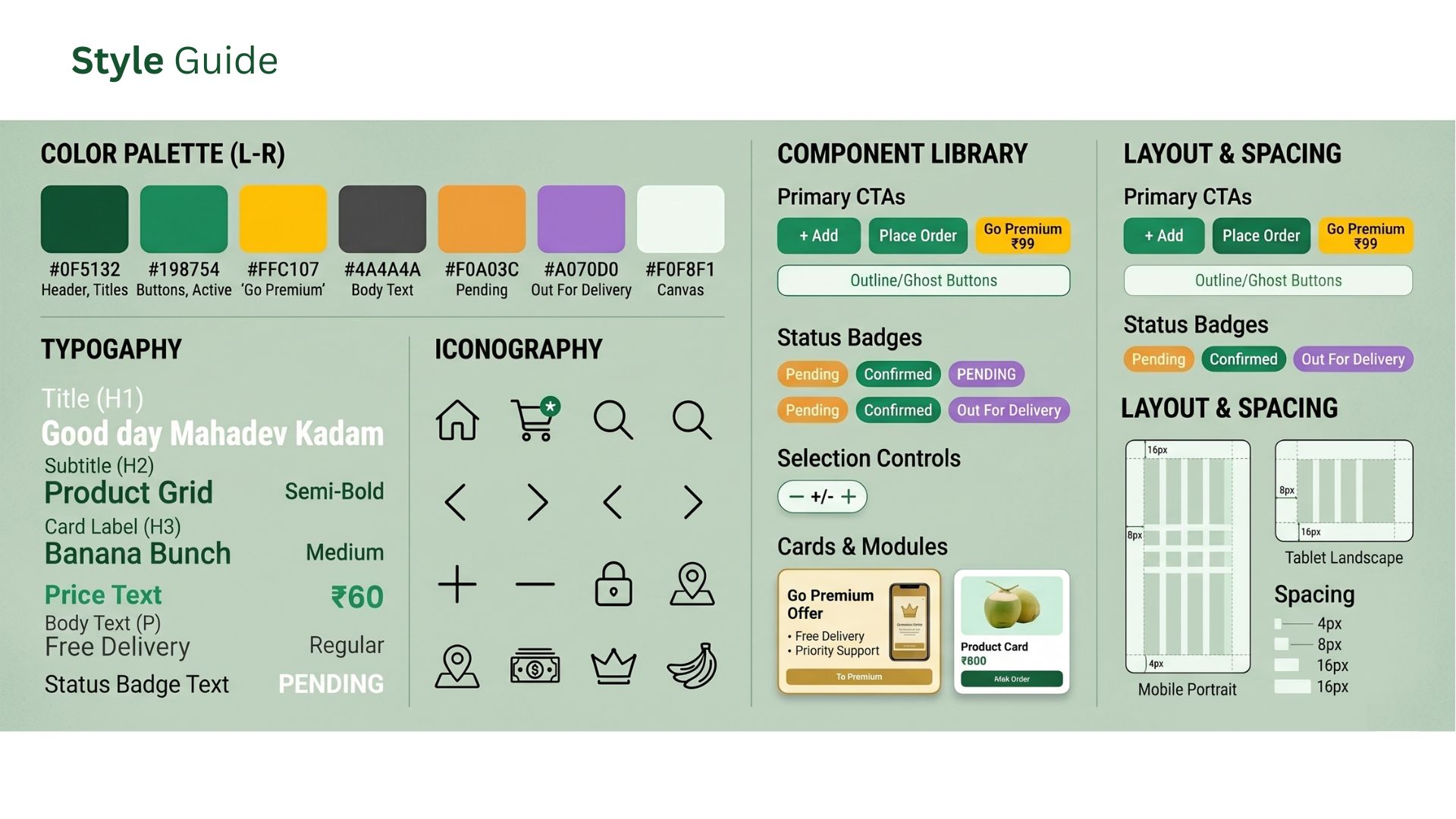
The Shree Coconut Design System — defining the visual language, color palette, typography, iconography, and UI components to ensure a consistent, fresh, and trustworthy brand experience across the app.
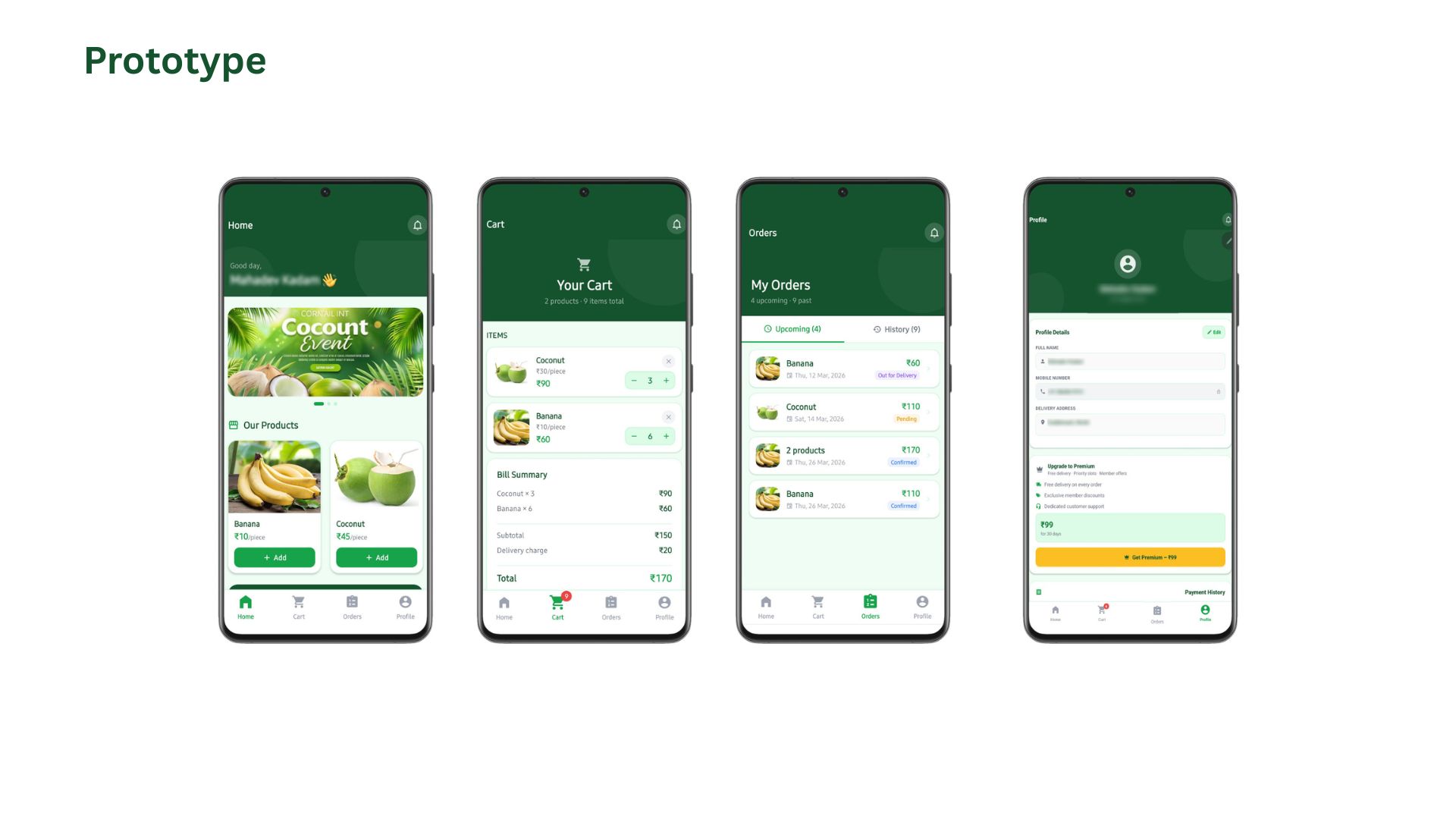
Prototype
High-fidelity mobile prototypes showcasing the final Android screens — from the splash and onboarding flow to product browsing, order tracking, and the vendor dashboard. These provide a realistic view of the end-to-end user experience.